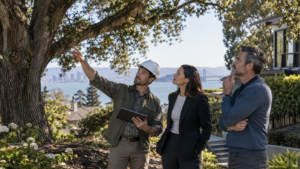
Trees are often among the most valuable and complicated features on a Bay Area property. A mature oak shading a home in the Peninsula, a redwood standing beside a commercial building, or a row of established trees surrounding a development site can influence everything from appearance and property use to construction plans, safety concerns, and long-term maintenance costs.
That is one reason property owners, business leaders, developers, architects, property managers, and homeowners throughout Northern California are increasingly looking for specialized guidance before making major decisions involving trees. Instead of waiting until construction begins or a tree becomes an obvious problem, many are bringing consulting arborists into the planning process much earlier.
For California’s business community, including the growing network of women entrepreneurs and executives supported through organizations such as the California Office of the Small Business Advocate, this reflects a broader approach to property management: make informed decisions before a manageable issue becomes an expensive one.
A Consulting Arborist Provides Independent Tree Expertise
A consulting arborist serves a different role from a company primarily hired to prune, remove, or maintain trees. The focus is professional evaluation, documentation, planning, and guidance.
An arborist may examine tree health, structure, species characteristics, surrounding conditions, root zones, construction impacts, potential hazards, preservation options, and other factors affecting a property. A written assessment can then help the property owner, architect, contractor, attorney, homeowners association, or other decision-maker determine what should happen next.
The broader field of arboriculture centers on the cultivation, management, and study of individual trees, shrubs, vines, and other perennial woody plants. Consulting work applies that knowledge to real-world property decisions where trees intersect with buildings, roads, utilities, landscaping, development, and people.
For Bay Area property owners who need an independent assessment, working with a Consulting Arborist Bay Area CA can provide professional information before decisions are made about preservation, removal, construction, risk, or long-term tree management.
Bay Area Properties Often Present Complicated Tree Issues
The Bay Area contains an unusual mix of dense urban neighborhoods, suburban communities, hillside properties, commercial corridors, historic districts, large estates, and active development sites. Mature trees frequently occupy the same spaces where owners want to expand homes, install additions, build accessory structures, replace driveways, redesign landscapes, or undertake larger commercial projects.
A tree that appears comfortably positioned in a backyard may have an extensive root system running beneath areas intended for excavation. Another tree may lean toward a neighboring property without presenting the level of risk someone assumes from appearance alone. A mature specimen may also be worth preserving even when a proposed construction plan initially seems incompatible with it.
The CAL FIRE Urban and Community Forestry Program emphasizes the importance of sustainable management of trees within California communities. CAL FIRE notes that urban trees can contribute to benefits involving stormwater, air and soil quality, carbon reduction, wildlife habitat, public health, energy conservation, and property value.
These benefits help explain why tree decisions frequently deserve more consideration than a simple choice between keeping a tree and removing it.
Construction Planning Is One of the Biggest Reasons to Call Early
The best time to think about protecting a mature tree is usually before heavy equipment, excavation, grading, trenching, or foundation work begins.
Construction can affect trees in ways that are not immediately visible. Root disturbance, grade changes, soil compaction, altered drainage, equipment traffic, and changes around the root zone can influence a tree long after the construction crew has left.
A consulting arborist can review proposed plans and identify areas where construction and tree preservation may conflict. That information can be useful to architects, engineers, contractors, landscape designers, and owners while changes are still practical.
Early involvement may allow a team to adjust the location of excavation, modify access routes, establish tree protection zones, reconsider grading, or develop other strategies intended to reduce unnecessary damage.
California’s emphasis on thoughtful urban tree management extends beyond individual properties. CAL FIRE’s Urban and Community Forestry Resources and Partnerships describe urban forestry as a collaboration among municipalities, counties, professional organizations, private companies, utilities, nonprofit groups, state agencies, and other participants.
That larger framework matters in the Bay Area, where private property decisions often exist within communities that place significant value on established trees and landscapes.
Tree Risk Requires More Than a Visual Guess
Large trees naturally attract attention when branches extend over homes, parking areas, sidewalks, neighboring properties, or public spaces. After storms or visible changes in a tree, owners may become particularly concerned.
A professional evaluation can help separate observable conditions from assumptions.
Tree assessment can involve looking at trunk condition, branch structure, cavities, decay indicators, root conditions, soil changes, previous pruning, canopy condition, surrounding targets, and other site-specific factors. The objective is to develop a clearer understanding of the tree and its environment rather than making a decision based only on size, age, or appearance.
That distinction can be important financially. Removing a large tree can involve significant expense and permanent landscape change. Keeping a compromised tree without understanding its condition can create different concerns. Professional documentation gives property owners more information to use when weighing those choices.
Documentation Becomes Important During Property Disputes
Trees do not always stay neatly within the practical boundaries of one property. Roots spread underground. Branches cross property lines. Construction on one parcel may affect vegetation on another.
These situations can become particularly complicated when neighbors disagree about responsibility, damage, tree condition, pruning, construction impacts, or removal.
A consulting arborist can document existing conditions and provide technical observations that create a clearer record of what was present at a particular time. Depending on the situation, reports may also assist attorneys, insurance professionals, property managers, homeowners associations, or other specialists reviewing a dispute.
Professional documentation is valuable because memories change and physical conditions evolve. Photographs, measurements, observations, site notes, and written assessments can preserve information that might otherwise disappear.
Tree Decisions Can Affect Business Properties Too
Consulting arborists are not only relevant to residential homeowners. Commercial properties, apartment communities, office campuses, retail centers, schools, municipalities, and development sites may contain substantial tree inventories.
For businesses, tree management can intersect with customer access, parking, visibility, employee safety, landscaping budgets, development plans, insurance considerations, and the appearance of a property.
California continues to devote resources to both entrepreneurship and responsible community development. The California Office of the Small Business Advocate works with businesses across the state on growth, resilience, financing, markets, and other resources, while its network includes specialized support for women entrepreneurs.
At the federal level, the U.S. Small Business Administration Office of Women’s Business Ownership supports women entrepreneurs through business training, counseling, capital resources, and Women’s Business Centers.
For women who own commercial buildings, investment properties, development companies, landscape firms, real estate businesses, or other California enterprises, property decisions involving established trees can become part of broader financial and operational planning.
Mature Trees Can Be Business and Property Assets
It is easy to think about trees strictly as landscaping, but mature trees can influence the character of an entire property.
They can frame entrances, provide shade, soften architecture, contribute to privacy, create outdoor gathering areas, and make established commercial or residential properties visually distinctive.
CAL FIRE identifies urban forests as part of California’s community infrastructure and has emphasized management practices intended to improve tree health and increase the benefits communities receive from urban forests. The state’s California Urban Forest Advisory has also highlighted effective urban forest management, workforce development, and high standards of tree care as statewide priorities.
Preservation does not mean that every tree should remain indefinitely. It means determining which trees can reasonably be retained, what care may be appropriate, what conflicts exist, and when removal may become the practical course of action.
That is precisely where independent professional analysis becomes useful.
Women in California Business Are Managing Increasingly Complex Assets
The relevance of specialized professional services becomes even clearer as women continue building companies, acquiring real estate, managing commercial properties, developing projects, and moving into leadership roles across California industries.
California maintains a network of Women’s Business Centers that provides business owners with consulting and training. The CalOSBA Small Business Resources page highlights these centers alongside other statewide resources designed to help entrepreneurs manage and grow their businesses.
The SBA Women-Owned Small Business Federal Contract Program also provides a pathway for qualifying women-owned companies to compete for certain federal contracting opportunities.
As businesses expand, owners often find themselves managing assets far beyond their original products or services. Buildings, land, parking areas, landscapes, construction projects, insurance, maintenance programs, and environmental considerations become part of the operation.
Professional advisers become increasingly important in that environment. Attorneys address legal matters. Accountants address financial reporting. Engineers address structural questions. Consulting arborists bring expertise to decisions involving trees and the spaces around them.
Early Advice Can Prevent Expensive Changes Later
Many property problems become more expensive after work has already started.
Once excavation has occurred beside a mature tree, options may be narrower. Once a large tree has been removed, preservation is no longer possible. Once construction documents have been finalized, altering a project may require additional design work and expense.
An early tree assessment gives owners information while they still have choices.
That can be particularly valuable during property purchases, remodel planning, commercial redevelopment, landscape redesign, utility work, driveway replacement, lot development, and projects involving neighboring trees.
The value of consulting often lies less in telling an owner what to do than in revealing conditions that may otherwise have been overlooked.
California’s Urban Trees Are Part of a Larger Economic Picture
Tree care is also an industry in its own right.
CAL FIRE reports that urban and community forestry activities contribute substantially to California’s economy through businesses, employment, payroll, tree care, planning, and related services. Its statewide resources describe an ecosystem involving public agencies, private companies, professional organizations, utilities, nonprofit groups, researchers, and community stakeholders.
For California Women’s Business readers, that makes arboriculture relevant from two directions. Trees are assets and responsibilities associated with residential and commercial property, while tree management itself represents part of California’s broader professional-services and green-economy landscape.
As development continues throughout the Bay Area, those two worlds increasingly intersect.
Professional Tree Planning Is Becoming Part of Smart Property Management
Property owners traditionally called tree professionals when something needed immediate attention. A limb had fallen. A tree appeared unhealthy. Construction crews discovered roots. A neighbor complained. A storm created visible damage.
That reactive approach is changing.
More owners now recognize the advantage of evaluating significant trees during the planning stage rather than after problems surface. Consulting arborists can become part of the same professional team that may already include architects, engineers, landscape designers, attorneys, contractors, and property managers.
This does not make tree decisions complicated for the sake of complexity. It does the opposite. Reliable information can simplify choices.
Owners can better understand what they have, what may be changing, what can potentially be preserved, what deserves monitoring, and what should be considered before money is committed to a project.
Conclusion
Bay Area trees can represent beauty, history, shade, environmental value, property character, and substantial financial investment. They can also create complicated decisions when development, construction, safety concerns, neighboring properties, or changing site conditions enter the picture.
That is why consulting arborists are increasingly becoming part of early property planning rather than professionals called only after a problem occurs.
For homeowners, women business owners, developers, property managers, investors, and other Bay Area decision-makers, obtaining independent tree expertise before making a major decision can provide something particularly valuable: a clearer picture of the property before irreversible choices are made.
As California continues balancing business growth, development, community character, and stewardship of its urban landscape, professional tree planning is becoming a practical part of responsible property ownership.
