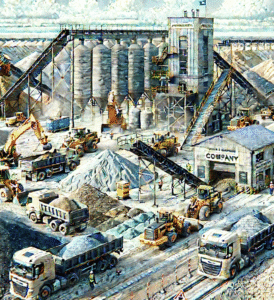
Starting a sand and gravel business might seem like a rugged, male-dominated industry — but women across the globe are breaking down barriers, taking the wheel, and building multi-million-dollar empires from the ground up. Whether you’re looking to diversify your investment portfolio, build a family legacy, or simply step into a profitable, high-demand industry, the sand and gravel sector offers incredible opportunities for women ready to dig in and lead.
In this blog, you’ll discover the practical steps, tools, mindset, and resources that can help any determined woman launch her own sand and gravel business with confidence and clarity.
Why Sand and Gravel? Why Now? 🏗️
Sand and gravel are essential materials in construction — the backbone of roads, buildings, concrete, landscaping, drainage systems, and more. According to the U.S. Geological Survey (USGS), the demand for aggregates continues to rise due to ongoing infrastructure development, urbanization, and housing needs.
This industry is not only recession-resilient but also scalable, meaning you can start small and grow into a regional powerhouse. As cities expand, the need for aggregates increases — and suppliers that offer reliability, safety, and integrity will always stand out.
Breaking the Stereotype: Women in the Aggregates Industry 👷♀️🌍
Historically, heavy materials industries have been dominated by men. But that’s changing. Women are entering roles as operators, executives, and owners — and bringing a unique, strategic, and relationship-driven perspective to the table. Initiatives like Women in Mining USA and Women of Asphalt are championing inclusivity, mentorship, and visibility for women entering trades and raw materials sectors.
The key? Understanding the business from the ground up — from sourcing to sales — and building the right team, strategy, and infrastructure to support your success.
Step-by-Step: How to Start Your Sand and Gravel Business 🛠️
1. Get Grounded in Research and Regulations 📚⚖️
Before you move a single load of gravel, you’ll need to understand the rules of the road — and the land. Every state has environmental, zoning, and permitting requirements when it comes to extracting and selling aggregates.
Start with:
Key questions to ask:
-
Is the land you’re considering zoned for mining or materials processing?
-
What are the environmental protection requirements (e.g., water runoff, dust control)?
-
Will you need an air quality permit?
-
How far are you from your target customer base?
Starting compliant saves you time, money, and legal headaches.
2. Secure Your Site and Resources 🧱🌳
You’ll need access to a site rich in sand and gravel deposits. You can either:
-
Purchase land with aggregate reserves
-
Lease land with mining rights
-
Partner with a landowner and split revenue
Work with a geologist or materials engineer to conduct a material analysis before committing to a site. This ensures the sand and gravel meet industry specifications and are worth the investment.
You’ll also need to determine:
-
How deep the deposit goes
-
The types of gravel (pea, crushed, etc.)
-
Sand quality and gradation
-
Ease of excavation
3. Form Your Business Entity 📑
Set yourself up legally and professionally. Most sand and gravel companies operate as LLCs or corporations for liability protection and tax advantages.
Your checklist:
-
Choose a business name (that aligns with strength and professionalism)
-
Register your business with the state
-
Get a federal EIN (Employer Identification Number) from the IRS
-
Open a business bank account
-
Obtain general liability insurance and workers’ comp
4. Buy or Lease Equipment 🚜🪨
The right equipment is essential — and can be your biggest upfront cost. You don’t have to buy everything brand new; consider leasing or purchasing used machinery from reliable dealers.
Basic equipment includes:
-
Front-end loader
-
Excavator
-
Dump trucks or haul trucks
-
Conveyor belts
-
Crushing and screening equipment
-
Scales for weighing loads
-
Portable office or control center
You’ll also need safety gear, fencing, signage, and potentially mobile fueling equipment.
Consider connecting with organizations like Women in Trucking if you plan to hire drivers or manage your own fleet.
5. Build Your Team and Culture 🤝🏗️
You don’t need to know how to operate a loader to run a sand and gravel business — you need to know how to lead. Hire skilled operators, mechanics, and drivers. Focus on safety-first, values-driven leadership and you’ll retain better talent and reduce downtime.
Create:
-
Clear job roles and onboarding materials
-
A company safety manual
-
Training programs and certifications (OSHA, MSHA)
As a woman in a male-dominated field, your leadership sets the tone. Lead with confidence, clarity, and care.
6. Market Your Materials Like a Boss 📈📞
Your success will come down to sales and logistics. You’ll need to move product consistently — to concrete plants, contractors, landscapers, and municipalities.
Marketing strategies to implement:
-
Create a professional website that ranks for “sand and gravel near me”
-
Use Google Business Profile to attract local buyers
-
Partner with local construction companies and public works offices
-
Run PPC ads for high-volume keywords like “bulk gravel delivery”
-
Join regional associations like the National Stone, Sand & Gravel Association
Highlight what makes you different:
-
Fast delivery
-
Clean material
-
Reliable service
-
Female-owned certification (which can help you qualify for government contracts through WBENC)
7. Set Up Logistics and Transportation 🚛🗺️
Transportation can make or break your business. Will you offer delivery, or will customers pick up? If delivering, factor in fuel, wear-and-tear, and driver management.
You may also want to invest in:
-
GPS fleet tracking
-
Route optimization software
-
Dispatch and scheduling tools
-
Partnerships with local trucking companies
Your sand and gravel won’t sell if it can’t get to the site on time.
8. Protect Your Investment with Smart Systems 🧾🖥️
Use technology to manage your operations — especially if you want to scale.
Recommended tools:
-
Inventory management software
-
Invoicing and accounting tools like QuickBooks
-
CRM (Customer Relationship Management) to follow up with leads
-
Safety and compliance tracking
Efficiency keeps your profits high and your stress low.
Funding Your Dream: Financing Options for Women 💰
Starting a sand and gravel business isn’t cheap — but many women entrepreneurs have made it work through smart financing.
Options include:
-
Grants for women-owned businesses (Grants.gov)
-
Equipment leasing
-
Private investors or silent partners
-
Crowdfunding with a niche angle (e.g., sustainable mining practices)
Tip: Write a solid business plan with projections, a materials report, and competitive research to boost your chances.
Common Challenges and How to Overcome Them ⚠️
No business is without roadblocks — but you can prepare in advance.
-
Challenge: Tough industry perceptions
Solution: Build credibility through transparency, community involvement, and results. -
Challenge: High start-up costs
Solution: Start small with one pit or subcontract equipment before scaling. -
Challenge: Navigating regulations
Solution: Hire a compliance consultant or attorney familiar with mining and environmental law. -
Challenge: Finding customers
Solution: Build a lead pipeline before you open. Attend industry trade shows. Offer introductory pricing.
Conclusion: The Ground is Yours — Claim It 🚀
If you’ve ever thought, “I could run that better,” you’re probably right. A woman-owned sand and gravel near me business brings strength, precision, and heart to an industry that desperately needs all three.
By aligning your vision with strategy, assembling the right team, and marketing like a modern CEO, you can break ground on a thriving business that supports communities and builds generational wealth.
Ready to start your sand and gravel business? Don’t wait. There’s a world of opportunity beneath your feet — and your story deserves to be written in stone.
👉 For more info on starting your business with confidence, check out SCORE’s free mentorship for women entrepreneurs.
👉 Need aggregate data for your business plan? Start with the USGS Aggregate Data Tools.
And remember: You don’t have to fit into the industry — you can redefine it. 💥