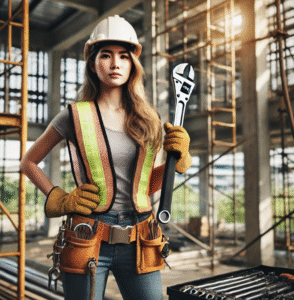
When you watch crews setting up scaffolding on a job site, one tool you might not notice—yet that plays a vital role—is the 7/8 scaffold ratchet. For many women contractors, this is more than just another piece of kit: it’s a precision tool that enhances safety, ergonomics, and jobsite efficiency. In this article, we’ll explore why female contractors often favor the 7/8 scaffold ratchet, how it helps them navigate challenges in a male-dominated industry, and practical tips for using it effectively.
Construction has historically been a male-dominated field, but over recent years women are making steady inroads. In 2025, women accounted for around 14.3 % of U.S. construction workers, continuing a trend of gradual growth. CONEXPO-CON/AGG Still, women in the field often face unique challenges—from skepticism of their technical skills to equipment that isn’t optimized for their strength and ergonomics. In that context, tool selection becomes especially important. A high-quality scaffold ratchet, particularly the 7/8-inch size, can offer meaningful advantages in everyday tasks. This isn’t just about raw torque—it’s about control, confidence, and minimizing risk on elevated platforms.
In what follows, we’ll dig into the practical reasons women contractors may prefer a 7/8 scaffold ratchet—looking at ergonomics, safety, efficiency, precision, and mindset—then wrap up with recommendations and encouragement for tool choice.
Ergonomics, Strength, and Control
One of the immediate benefits of a 7/8 scaffold ratchet is the balance between torque and manageability. Scaffold systems often use 7/8-inch components or couplers, so a ratchet sized to that standard fits directly. But beyond compatibility, the design of the tool matters.
For contractors who may not want to strain wrist joints or risk overexertion, a well-designed ratchet—lightweight but strong—helps them apply force smoothly rather than wrestling with heavy, oversized wrenches. Because scaffolds involve repeated tightening and loosening, fatigue is a real concern. A ratchet that offers a smooth action, a comfortable grip, a suitable handle length, and positive feedback (i.e. it clicks or ratchets cleanly) means less wasted motion or “fighting” the tool. That allows a contractor—regardless of gender—to pace her work, maintain precision, and avoid overuse injuries.
Moreover, in tight spaces or precarious positions (on a plank, high up, or with limited foot support), having better control of torque and motion is a safety multiplier. A tool that “feels right” inspires confidence to get the job done cleanly and securely.
Safety on Elevated Platforms
Scaffolding inherently carries risk. A loose coupler or insufficient tension can lead to instability. Women contractors often emphasize safety because many are acutely aware of how physical risks weigh more heavily (in perception) on them in a workplace that sometimes underestimates them. Using a proper scaffold ratchet reduces the chance of mistakes.
Because 7/8 scaffold ratchets are made specifically for the coupling sizes used (rather than improvising with open-end, adjustable wrenches or makeshift tools), there is less slippage or rounding of fittings. Good ratchets will also include features like positive stops or torque feedback to prevent over-tightening or under-tightening. That consistency helps ensure structural integrity of the scaffold under load, reducing jobsite incidents.
Additionally, by minimizing guesswork and making tightening more reliable, it helps contractors avoid revisiting scaffold sections later (which means fewer trips up and down ladders, less physical wear, and lower exposure to fall risks).
Efficiency, Speed, and Workflow
Speed and workflow matter in contracting. Every job has deadlines, overhead costs, and pressure to minimize downtime. A ratchet built for scaffold components allows quicker turning, faster setup, and fewer tool changes. For example, rather than switching between an adjustable wrench and a coupling spanner, using a ratchet that directly fits the coupling reduces handling time.
Women contractors who manage crews often look for ways to streamline tasks—cutting friction in tool use, encouraging consistency, and reducing mistakes. A tool that is intuitive and reliable fosters consistency across team members.
Also, when scaffolding is being reused or shifted, efficient dismantling is needed. The same ratchet used to assemble can quickly disassemble scaffold couplers, bringing speed and consistency to teardown. That matters on tight schedules.
Precision, Feedback, and Quality
Tightening scaffold couplers isn’t always “as tight as possible.” If a coupler is overtightened, it can damage scaffold tubes or components; undertightened, it compromises safety. A ratchet that gives tactile or audible feedback helps the user sense when the proper snugness is reached without over-torquing.
Women contractors aiming for craftsmanship and reputation rely on quality and precision. Using the right tool helps ensure that the scaffold is plumb, stable, and meets safety inspections. When clients or inspectors walk a site, the difference between a scaffold that looks solid and one that looks “iffy” matters. Choosing the correct ratchet reflects attention to detail, which bolsters professionalism.
Moreover, because women (and many other underrepresented tradespeople) sometimes feel they must prove their competence more than counterparts, using refined, proper tooling becomes part of asserting credibility.
Psychological and Symbolic Importance
While the mechanical advantages are compelling, there’s also a psychological dimension. In a jobsite setting where tools are often optimized for “standard profiles” and where women may encounter skepticism or judgment, selecting high-quality, correctly sized tools becomes an act of self-respect and empowerment.
When a woman contractor shows up with her own set of scaffold ratchets that she trusts and maintains, she signals that she knows her trade, takes safety seriously, and won’t compromise. It’s part of professional identity. Having equitable access to high-quality tools counters the narrative that women are “just helpers” or less technical.
Furthermore, tools that reduce frustration and effort let her focus energy on planning, quality, client communication, team coordination, and craftsmanship—rather than struggling with misfit wrenches or jury-rigged hacks. That shift in mental load is meaningful: less annoyance, fewer injuries, more confidence.
Addressing Challenges and Misconceptions
Some might argue: “Why single out women contractors? A good ratchet is good for everyone.” And that’s true. But the reality is that tool ergonomics, strength distribution, and perception biases matter. A woman contractor may be less willing to use brute force tools or risk injuries. She’s more likely to benefit from a ratchet that balances torque with finesse.
Also, jobsite culture sometimes defaults to supplying large, generic tools, not necessarily the ones best suited to every user’s biomechanics. Women may be less willing to “make do” with suboptimal tooling, especially when it means more strain or risk.
By advocating for and using appropriate tools like the 7/8 scaffold ratchet, women contractors push norms toward better tool equity, encouraging manufacturers and crews to consider a broader range of users.
Additionally, selecting and caring for tools sends a signal about seriousness and professionalism—helpful when working in environments where one may still face skepticism or microaggressions.
Practical Tips for Women Contractors Using a 7/8 Scaffold Ratchet
-
Select the right quality. Invest in a ratchet from a reputable brand, with hardened steel, corrosion resistance, and a snug fit to 7/8 couplers. A loose fit is less safe and less satisfying to use.
-
Check range and torque feedback. A ratchet with clear click feedback or positive stops helps prevent over-tightening or under-tightening.
-
Use proper handle length. The balance between torque (long handle) and control (short handle) is key. Avoid overly long handles that strain joints or overly short ones that require too much force.
-
Maintain your ratchet. Keep it clean, lubricated, and inspect drive pawls and teeth. A well-maintained tool is safer, more precise, and lasts longer.
-
Train your crew. Share with foremen and team members why this ratchet matters—not just to you but to the consistency and safety of the scaffold system. Encourage adoption across crew, not just as a “women’s tool.”
-
Use gloves that preserve feel. Thin impact gloves or anti-vibration gloves let you feel the ratchet clicks yet protect your hands.
-
Combine with torque checking. For critical scaffold installations, consider verifying torque with a calibrated torque wrench to ensure structural compliance.
Industry Support
Women in construction have steadily increased their presence, contributing to a richer, more inclusive workforce. HBI+2NAWIC.ORG+2 Organizations like the National Association of Women in Construction (NAWIC) work to support women’s careers through advocacy, training, and networking. NAWIC.ORG Meanwhile, construction publications spotlight the evolving role of women contractors and how the industry is adapting. Engineering News-Record These kinds of industry voices and supports help normalize conversations about tool design, ergonomics, and equal access to gear.
Conclusion
The 7/8 scaffold ratchet may seem a modest piece of hardware—but for women contractors, it often becomes a linchpin in balancing safety, precision, efficiency, and professional dignity. When you work on scaffolding day after day, the subtle advantages of correct tool size, controlled torque, comfortable handling, and reliable feedback add up. They reduce fatigue, lower risk, and empower you to stand firm in your expertise.
As more women build confidence in the trades, demanding precisely suited tools like the 7/8 scaffold ratchet helps shift culture, inspires better tool manufacturing, and encourages crews to focus on performance—not assumptions about who “should” install scaffold couplers. In a field where strength, accuracy, and confidence carry equal weight, a well-chosen tool is more than a convenience—it’s part of the foundation of success. 🛠️
